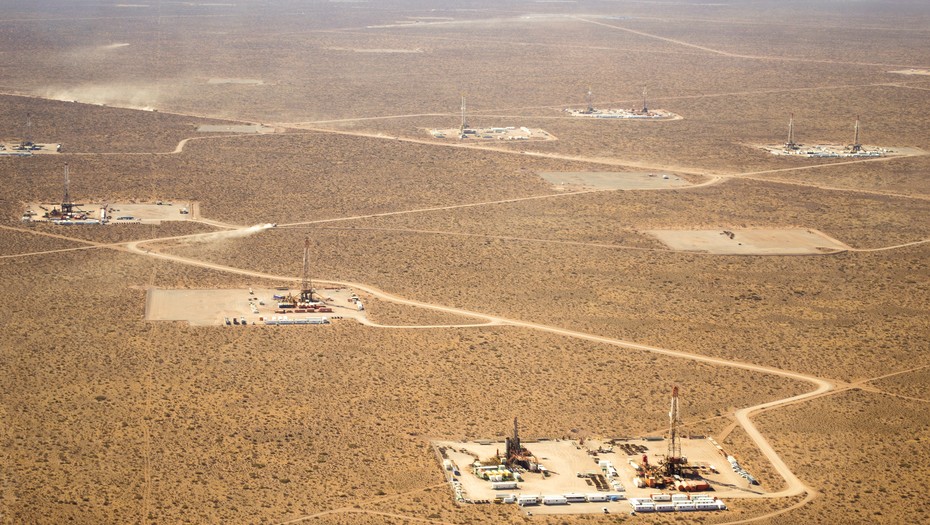
Chemical additives for Vaca Muerta: supplying the world’s most active shale play outside the US
Chemical additives for Vaca Muerta operations are among the most strategically critical inputs in Argentina’s energy industry. The formation is one of the most active shale plays in the world outside the United States: with more than 300 wells drilled per year, demand for chemical products across drilling, completion and production has grown into one of the country’s most dynamic industrial markets.
But operating in shale is fundamentally different from conventional reservoir production. The pressure, temperature and formation water composition in Vaca Muerta create specific technical challenges that require purpose-built chemical formulations — not generic products adapted from other geographies or reservoir types.
The chemical challenges of shale operations across each stage
Chemical additives intervene at four key stages in the life cycle of a Vaca Muerta well:
Drilling
Drilling fluids must control viscosity while simultaneously inhibiting clay hydration in the formation. Hydrating clays cause borehole wall instability, increasing the risk of collapse and potential well loss. Polymer-based clay inhibitors are the most effective solution for this problem in shale environments.
Cementing
During cementing, retarders and rheological modifiers allow precise control of cement setting time as a function of well depth and temperature. Poorly controlled setting can compromise zonal isolation and affect well productivity throughout its entire productive life.
Hydraulic fracturing
Shale hydraulic fracturing involves pumping large volumes of water at high pressure. Friction reducers are the highest-volume additive in this stage: they allow fracturing fluids to be pumped with significantly lower resistance, reducing pressure requirements, energy consumption and equipment wear.
Production
Once the well is in production, formation water begins generating mineral scale in flowlines, valves and surface equipment. Scale inhibitors are the preventive treatment that keeps production systems operational between interventions.
Scale inhibitors: the silent problem in Vaca Muerta production
Formation water in Vaca Muerta has a chemical composition that strongly favors precipitation of calcium carbonate, barium sulfate and strontium sulfate. These salts deposit on the internal surfaces of tubing, valves and heat exchangers at a rate that, without treatment, can partially obstruct a flowline within weeks.
Modern scale inhibitors work at very low dosages — between 10 and 50 ppm on the treated flow — by distorting the crystal growth of these salts and keeping them in suspension so they are carried away by the process stream. The result is a significant reduction in intervention frequency and production line maintenance costs.
At Kimiker, we work with real water samples from each client to select and validate the formulation best suited to the specific formation water composition of each well or battery. Generic formulations applied without prior water analysis frequently underperform or require excessive dosage to achieve the desired result.
“The same threshold-effect inhibition chemistry we apply in oilfield production is also used in lithium brine processing. Learn more in our article on lithium slurry dispersants and scale inhibitors.”
Friction reducers for hydraulic fracturing in shale
High molecular weight polyacrylamide-based friction reducers are the highest-volume chemical additive in Vaca Muerta fracturing operations. Their function is to reduce friction between the fracturing fluid and the tubing wall during high-pressure pumping.
The operational benefits are measurable and consistent:
- 60 to 75% friction reduction compared to untreated water
- Lower required pumping pressure, reducing mechanical stress on equipment
- Lower energy consumption per fracturing stage
- Reduced wear on pumps and manifolds
- Ability to increase pump rate without exceeding pressure limits
Optimal dosage and molecular weight depend on the salinity of the mix water and pumping conditions. Kimiker conducts friction reduction tests with the client’s actual mix water before recommending a formulation.
Local manufacturing: guaranteed supply for continuous operations
One of the most significant vulnerabilities in Vaca Muerta operations is dependence on imported chemical inputs with long and unpredictable replenishment times. A missing chemical additive can halt a fracturing stage or force an unplanned production intervention — with costs that far exceed the price of the product itself.
Kimiker manufactures at its own production facility in Buenos Aires with dispatch capacity in 48 to 72 hours to any point in Argentina. Products are delivered in:
- 1,000-liter IBCs
- 200-liter drums
- Bulk format based on client volume and logistics
Local supply is not just a cost advantage: it is an operational guarantee for drilling and fracturing campaigns that cannot tolerate delays in chemical availability.
Need chemical additives for your Vaca Muerta operation?
Kimiker’s technical team works with each client to select and validate the right products for their actual operating conditions. The process includes sample evaluation, compatibility testing and field trial technical support.
📧 contacto@kimiker.com.ar 📞 +54 9 11 3288 3191 🌐 kimiker.com.ar
Kimiker SRL — Industrial Chemical Products Av. Rodríguez Peña 3355, San Martín, Buenos Aires, Argentina.